

Understanding intelligence has always been a fascinating topic amongst scholars and everyday people alike. Classical theories have claimed that some individuals are just born infinitely smarter and more talented than others – and therefore are more naturally positioned to experience unbridled success in many aspects of their lives. Conversely, modern psychological research shows that effort, perseverance and deliberate practice are as crucial as, and in many cases more important than, innate intelligence and ability in driving personal & professional success. One of the main proponents of this view is Robert Sternberg, Professor of Psychology in the College of Human Ecology at Cornell University and an Honorary Professor of Psychology at Heidelberg University, Germany. Sternberg’s evolving theories on intelligence offer both practical wisdom and hands-on tools to improve one’s life. Although I have referenced Robert Sternberg’s work in previous blog posts, I wanted to take a slightly deeper dive into his work within this article.

Robert Sternberg, Ph.D
Discovering Robert Sternberg
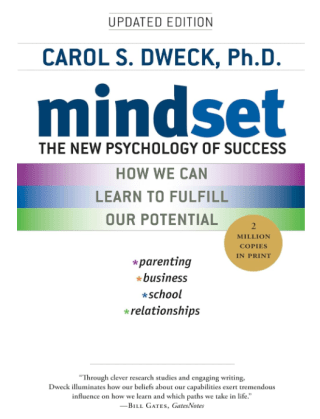
I initially discovered Robert Sternberg through Professor Carol Dweck, Professor of Psychology at Stanford University, or more specifically through her book ‘Mindset: The New Psychology of success’, which I highly recommend as a “must-read” for anyone looking to empower their intellect and outlook on life. I studied Dweck’s material in ‘Mindset’ as part of my research for a book my wife and I are co-authoring regarding personal, relational and organizational growth and how “health” is a key component. Needless to say, Dweck’s references to Sternberg’s thoughts on intelligence were so profound that it warranted further exploration on my part. If you wish to learn a little more about Carol Dweck and practical insights from her book, ‘Mindset’…especially regarding the “growth mindset” versus the “fixed mindset”, I also highly, highly, highly recommend obtaining and reading Carol Dweck’s Book ‘Mindset: The New Psychology of success’ through my affiliate link by clicking on the pic below:
I also encourage you to check out these other Blog posts inspired by my research on her material.
-
Empowering Knowledge: How the Growth Mindset Transforms Intelligence
-
Embracing Failure: A Path to Empowerment

Before We Continue, a Few Disclaimers…
-
I am not a psychiatrist, psychologist, neuroscientist, medical professional or licensed counselor. Any information I share is based upon my research of the experts within those fields…and my interpretation of their material. Anything I suggest in terms of reframing your thinking or “calls to action” is strictly my opinion/perspective and should not be construed as professional or medical advice.
-
My wife and I are co-authoring a series of children’s books on having a victorious mindset; however, we believe that adults of any age can benefit from the material. Basically, we are creating books we wish we would have read when we were growing up. As such, our research takes us down many “proverbial rabbit holes”. As such, some of the knowledge we discover or stumble upon causes us to have enlightening “A-HA” moments and paradigm shifts that I believe are worthy of further exploration. I believe these golden nuggets of wisdom are not only worth studying; but more importantly, sharing with others through this medium of blogging because I wholeheartedly believe that the material can help empower and transform people’s lives.
-
I am NOT a Guru whatsoever, but I do consider myself to be scholarly and writing on topics such as this is fulfilling to me. Furthermore, it allows me to internalize the information I study and apply it as wisdom within my own life.
-
This blog post does contain affiliate links; however, any product (mostly books) I recommend directly correlates or resonates with the content expressed herein. Additionally, I only promote products I personally use and/or believe in.

Photo by Meghan Hessler on Unsplash
Unpacking Sternberg’s Triarchic Theory of Intelligence
Robert Sternberg began his groundbreaking work in the early 1970s, when he questioned why people continued to believe that standardized tests of intelligence – such as the IQ test – were the ultimate measure of human potential when it was obvious that measured intelligence wasn’t everything. His triarchic theory of human intelligence, outlined in 1985, provides a framework with three key elements as you can see in the diagram below.

- Analytical Intelligence: This refers to higher-order cognitive skills, including critical thinking, problem-solving and being able to analyze and evaluate information, as traditionally assessed by IQ tests.
- General Example – Solving a Complex Math Problem; A student is given a challenging calculus problem that requires understanding multiple concepts, such as differentiation and integration. To solve it, the student needs to:
– Analyze the problem and understand what is being asked.
– Break down the problem into smaller, manageable parts.
– Apply the correct formulas and mathematical rules.
– Evaluate the results to ensure accuracy.
- Personal Example – My Career: As of this writing, I am a Commercial Real Estate Development Professional and I have to be very analytical and precise in my work whether it is vetting deals, securing entitlements, structuring financial documents, crafting pitch decks, or managing multimillion-dollar projects.
- Creative Intelligence: This represents the dimension that allows people to produce novel ideas and respond to new situations, reflecting a person’s innovative and adaptive capacities.
- General Example: Inventing a New Gadget; An engineer comes up with the idea for a new type of smartphone that can fold and expand into a tablet. To bring this idea to life, the engineer must:
– Think outside the box to design a mechanism that allows the device to fold without damaging the screen.
– Innovate by incorporating new materials and technologies that are not currently used in traditional smartphones.
– Adapt to challenges during the development process and find creative solutions to unforeseen problems.
- Personal Example – Writing and Career: I often tap into my creative intelligence side through my writing. This blog post may not be the best example as I am sharing research already conducted; however, the creativity comes into play as I have to use my “imagination” in presenting the material I write on a way that is palatable and applicable to my audience. Also, I write poetry and have other fictional works in progress that digs deep into my creative proccesses. On the professional side, I have used my creative intelligence to develop brands and sub brands for my company as well as commercial space designs within the projects I have been a part of.
- Practical Intelligence: often referred to as ‘street smarts’, this component refers to the ability to apply what you know to actual situations so that you can function well in the world.
- General Example: Navigating a Social Situation; A person is at a networking event and wants to make a good impression to secure a potential business partnership. They need to:
– Understand social cues and the dynamics of the room.
– Apply their knowledge of effective communication to engage in meaningful conversations.
– Use practical problem-solving skills to navigate any awkward moments or misunderstandings.
- Personal Example – Brazilian Jiu-Jitsu (BJJ): I have been a Martial Artist for 30+ years and no other martial art has challenged me more than BJJ in which I hold a third stripe purple belt as of this writing. BJJ is often called a chess match and you have to have an answer for every move from your opponent. Because BJJ is so fluid, anything can happen during a sparring session or roll. Therefore, you have to apply concepts and techniques within microseconds as situations arise. Additionally, from a broader self-defense perspective, one definitely needs practical intelligence or ‘street smarts’ to recognize danger or how to avoid or mitigate it.
Sternberg’s triarchic definition of intelligence encourages us to recognize that there are multiple dimensions of intellect, and we should not define how smart we are strictly based upon one modality of intelligence alone. Furthermore, his studies encourage us to move away from thinking of intellectual talents as fixed endowments. Instead, we ought to think of intelligence, skills, and abilities as changeable qualities one can cultivate in purposeful ways.

Photo by Nikolai Chernichenko on Unsplash
The Core of Sternberg’s Philosophy: Purposeful Engagement
At the core of Sternberg’s philosophy is the idea of deliberate practice – self-directed attempts to seek out meaningful challenges and learning opportunities to strengthen one’s potential and develop greater agency. This deliberate approach dovetails nicely with the “growth mindset”, the idea that intelligence is not fixed… but is rather a malleable capacity that can be cultivated with sustained effort and strategic learning.
- Utilizing Challenges for Growth: As Sternberg writes: “The central idea is that to prepare individuals for attribution of knowledge on the one hand, and the ability to cope with more complicated problems on the other, the tasks of intelligence should be modelled to place the individual in situations of intellectual challenge.” When given challenging situations to solve, subjects are pushed beyond their current capabilities, leading them to acquire new skills through “deliberate practice”, and to develop deeper wisdom in grappling with difficult dilemmas. Take a musician learning to play a challenging piece on an instrument: the piece might be broken up into small segments, worked on in pieces, and then practiced relentlessly – all with the aid of a patient, trained teacher.
- Learning from Mistakes as a Path to Wisdom: Sternberg does not consider an error a failure in the way that most individuals view failure – with a doom and gloom attitude. If framed correctly, should an error occur, one gains the necessary information useful for strategic improvement. Therefore, failure should not be disheartening, but should actually be encouraged as it promotes a willingness to experiment; a crucial trait that will ensure success over a lifetime, as well as fosters a sense of empowerment. To add further clarity on what is in my humble opinion, a proper attitude towards failure, I’d like to share something I wrote in a previous article: “In general, nobody likes to fail but everyone wants to win. The funny thing is that in order to win and to win big, you must accept that failure is an inevitable part of the learning process. Now, this does not mean that we actively seek failure by being unprepared or doing things half-heartedly. If failure happens, it should be the result of pursuing something extremely challenging and despite being thoroughly prepared and putting forth 100% effort, you fall short of the prize. Failing in this way provides valuable data which you can take back to the drawing board and begin working towards that goal again.”
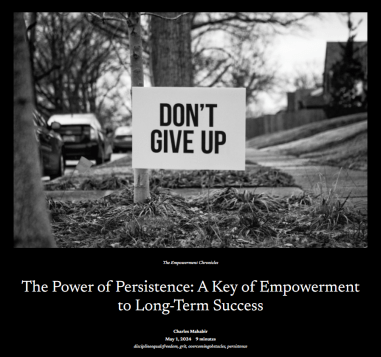
- The Importance of Persistence in Empowerment: Persistence is particularly vital – which is why Sternberg has added it to his theory. Learning any skill or striving to achieve a goal is rarely a straightforward process; there are often setbacks, hurdles, and unanticipated challenges involved. Sternberg stresses the need for “a will to succeed”, pointing out that continued effort is needed in order to make a breakthrough. To learn more about the power of Persistence, please read my blog post on ‘The Power of Persistence: A Key of Empowerment to Long-Term Success’ by clicking on the pic below:
Broadening the Impact of Sternberg’s Insights
Sternberg’s ideas can empower us to take personal responsibility for our lives at work and at home. When we acknowledge that learning is always possible, that intelligence and capabilities are expandable, we can transform our lives immensely. Here are a couple of practical examples:
- Educational Empowerment: In education, Sternberg’s work has great potential to be transformative. By creating classrooms where opportunities are faithfully presented and where risk-taking is integral to learning, teachers enable their students to navigate obstacles and encourage a lifetime commitment to learning.
- Professional Empowerment: At work, Sternberg’s concepts encourage lifelong learning, self-improvement and challenge, thereby leading to personal satisfaction and career advancement.
- Personal Empowerment: By applying Sternberg’s insights to their personal lives, individuals can view challenges as opportunities for growth, which can potentially lead to a more fulfilling life. For instance, someone might take up a new language or hobby, not just for enjoyment but as a way to cultivate new skills and self-efficacy.
Calls to Action:
- Think through how Sternberg’s Triarchic model of intelligence applies to your present circumstances. How do you use analytical, creative and practical intelligence in your everyday life? How would you rank their contributions to your personal experience? Is there one modality you lean more towards compared to the others? Does the modality of intelligence you use change in certain situations or environments?
- How can you develop all three modes of intelligence and what would it look like if all three were deliberately operating in your life? In a near future Blog Post, I will explore how you can practically develop all three intelligence models.
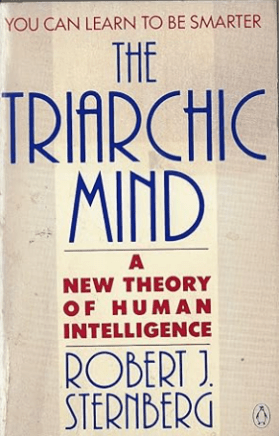
- Take a deeper dive yourself into Robert Sternberg’s work and consider reading his book ‘The Triarchic Mind: A New Theory of Human Intelligence‘ by clicking my affiliate link on the pic below:
Conclusion: Growth through Sternberg’s Framework
Robert Sternberg’s contributions upend the archaic fixed-talent model, as well as underscore the dynamic interplay of effort, strategic learning and tenacity throughout our lives. He offers an empowering paradigm for every person to engage with their endeavors in a purposeful way. By applying Sternberg’s ideas, we can see that we can rise to our greatest challenges and unlock our ability to reach our largest aspirations and hopefully empower ourselves with knowledge and wisdom throughout.
If you found this content informative and empowering, sign up to receive emails every time I release a blog post at charlesm.online
REFERENCES
- Sternberg, R. J. (1989). The triarchic mind: A new theory of human intelligence. Viking.
- Dweck, C. S. (2006). Mindset: The New Psychology of Success. Random House.
- Stanford Profile: Carol Dweck
- Cornell Profile: Robert Sternberg

 Charles Gregory, Author
Leave a comment