
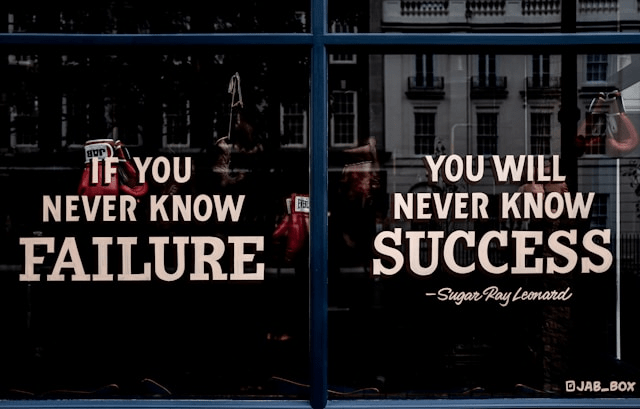
The Fear of Failure and the Growth Mindset
In the opening chapter of Carol Dweck’s iconic book, ‘Mindset’: The New Psychology of Success, an intriguing idea is unveiled showcasing a subtle yet extremely powerful characteristic of human nature—the way in which we perceive failure from childhood to adulthood; and the power that we attach to failure in our personal and professional development. By exploring the topic of failure, Dweck enlightens us to a root cause of why people either fall short of their true potential or fully unleash it within their lives over the long run. Dweck’s research reveals that some of us interpret failure with a sense of doom. In other words, failure is viewed as a dark omen, or even a damning judgement on one’s abilities and capacity…But what would it look like if we reframed failure as a launchpad to empowerment and success, rather than a stagnant verdict of incompetence? Dweck’s research shows that it can.
Disclaimers
- I am not a psychiatrist, psychologist, neuroscientist, medical professional or licensed counselor. Any information I share is based upon my research of the experts within those fields…and my interpretation of their material. Anything I suggest in terms of reframing your thinking or “calls to action” is strictly my opinion and should not be construed as professional or medical advice.
- My wife and I are co-authoring a book on the importance of “health” in personal, relational and organizational growth. As such, our research takes us down “proverbial rabbit holes” on many occasions. Some of the knowledge we discover or stumble upon causes us to have enlightening “A-HA” moments and paradigm shifts that I believe are worthy of further exploration. I believe these golden nuggets of wisdom are not only worth studying; but more importantly, sharing with others through this medium of blogging because I wholeheartedly believe that the material can help empower and transform people’s lives.
- I am a nerd, and I am proud of it. Writing on topics such as this is rather enjoyable to me. Furthermore, it allows me to internalize the information I study and apply it as wisdom within my own life.

How I Discovered Carol Dweck and her Book ‘Mindset’
As noted in the disclaimer above, in conducting research for a book my wife and I are co-authoring, the theme of which is how to create, grow and sustain healthy environments within our homes, relationships, and workplaces; Dweck’s book ‘Mindset’ was and continues to be a treasure trove of knowledge and wisdom. Our thesis for our book is that in order for any organizational unit to be “healthy” whether it is a family or a large-scale institution, the leader or leaders need to be “healthy” first. Why? Because leaders or people of influence create and drive culture. My assertion is that for an individual to be truly growth minded, they first need to be deliberate about being healthy since healthy things grow naturally. After studying Dweck’s book multiple times, I literally wonder to myself to this day, “Why isn’t this book highly recommended or perhaps even required reading in educational institutions, organizations, and teams. While there is a lot of great material out there on personal development, leadership and organizational improvement, I am wholeheartedly convinced that if your mindset isn’t oriented towards growth then said materials are irrelevant because you will reject whatever information (no matter how battle-tested and proven), is provided. I hope that this blog will serve as a catalyst for individuals who recognize that how they define failure may be unhealthy and is potentially holding them back in a significant way. More importantly, I hope after reading this blog, these same individuals will embrace a calling to alter how they view failure (as a learning opportunity to improve) thus empowering them to achieve true sustainable success. If you are looking for other highly recommended life-changing books besides Dweck’s Mindset, please read my Blog Post: ‘The Essential Library for Those Seeking to Empower their lives: Insights and Recommendations‘

Understanding Mindsets: Fixed vs. Growth
Carol Dweck’s ‘Mindset’ identifies two overarching mindsets that define our life experience: the “fixed mindset”, and the “growth mindset”. A person with a “fixed mindset” believes their qualities, such as their intelligence and talents, are innate only, and cannot be significantly improved through effort. “Fixed mindset” individuals often define themselves by their successes and failures. They are generally quick to talk about their successes when discussing themselves and will fight hard to mask their failures; and should the topic of personal failure come up, they are quick to blame others or circumstances…but never themselves. To the “fixed mindset’ individual, failure is falsely perceived as an ugly reflection of who they are inside; and as a result, they often shy away from challenges that could result in exposing their weaknesses.
On the other hand, people with a “growth mindset” believe that their talents and capacities are simply starting points for personal development. They believe that both talents and weaknesses are simply skillsets that can be nurtured into their full potential through dedication and purposeful practice. For individuals with a ‘growth mindset, failure is not a statement of who they are, but rather a golden opportunity for them to learn, become stronger and grow.
The Puzzle Challenge: A Child’s Reaction to Failure
In a landmark experiment, Dweck observed how children reacted after being given a series of puzzles to solve ranging from easily solvable transitioning into more difficult ones. Some of the children cringed at the thought of taking on more challenging puzzles as they felt that if they became stuck, it would be a reflection of their intelligence or lack thereof. Others, however, lit up at the prospect of solving more difficult puzzles. To them, taking on new challenging puzzles would give them an opportunity to learn and grow. The growth mindset is, after all, about welcoming challenges – and even setbacks – with a sense of opportunity.

Photo by Ryoji Iwata on Unsplash
Failure as a Stepping-Stone to Empowerment
Here’s how viewing failure as a lesson rather than a liability can contribute to powerful transformation in your work and your life:
- Embracing Challenges: Adults face situations similar to the children in Dweck’s puzzle experiment as well – A new job, a tough project, learning a new skill: any effort in which there’s a chance of failure (to others) can trigger our deep-rooted fears of failure. But if we can treat failure as feedback, rather than accepting it as the final result, we can grow beyond the limits of our current abilities and build experience that can help us the next time around.
- Learning from Setbacks: Every failure becomes a profound lesson. By analyzing what worked and what didn’t; by examining our mistakes and understanding how to avoid them in the future; we can transform failure into a learning opportunity towards further success. That’s truly what the growth mindset is about: reflection and adaptation. We become more aware, and this awareness helps us identify the tools we need to succeed.
- Building an Attitude of Persistence: The more exposure we have to adversity combined with learning from it, the more persistent we become when facing challenges. To be clear, persistence is not about “never failing”. Rather, a persistent person is someone who falls down, gets back up and is ready to move forward again with more wisdom and experience – strengthening the conviction that they can face the challenge and survive to tackle it again. To learn more about the Power of Persistence, read my blog post called ‘The Power of Persistence: A Key of Empowerment to Long-Term Success‘:

Fostering a Growth Mindset for Empowerment
Developing a growth mindset can have far-reaching effects on the entirety of your life – here are some practical ways to do it:
- Declare Learning Goals: Declare something powerful and profound such as “I want to learn [X] by [a realistic time goal] because of [why] by doing [how].” Here is an example of what I mean: “I want to learn how to play the piano decently one year from now because it’s something I’ve always wanted to learn since I was a child, and I don’t want to have any regrets at the end of my life. I will achieve this goal by signing up for piano lessons tomorrow.” Contrary to this statement, DO NOT EVER lead with a non-empowered statement such as “I want to be X.” or as an example, “I want to be a musician”. Because this statement is overgeneralized and non-specific, it lacks power, invokes “leaving things to chance”, and promotes wishing for something to happen versus taking personal responsibility to make it so. Furthermore, it causes one to shy away from the potential of failing (which is part of the success journey) because all of your focus is on a wish versus the actual process to get there. Whereas, the first statement, ‘I want to learn how to play the piano decently one year from now because it’s something I’ve always wanted to learn since I was a child, and I don’t want to have any regrets at the end of my life. I will achieve this goal by signing up for piano lessons tomorrow.’, declares boldness of intention, sets the stage for taking action, and focuses you on what you want to learn or why you want to do it rather than on proving your worthiness through a title.
- Create a plan and take action: Once you declare your learning goals, create a plan, take action, and be disciplined yet fluid in executing said plan. If we were to use the “learning to play the piano” example in the bullet point above, a plan may look like: 1) Go to piano lessons once a week; 2) Practice one hour of piano every evening; 3) Listen to piano music from famous composers on my drive home from work every day; and 4) Watch pianists perform on You tube during my downtime. In terms of the fluidity part, we all know that “life happens”. For example, you may be listening to piano music on your drive home from work as part of your plan but then get interrupted by a work-related call that nixes your effort. It would be easy to let the “fixed mindset” kick in and fall victim to negative self-talk which may sound like, “I’m never going to be able to play the piano because of interruptions like this. Maybe this is an unrealistic goal. What am I doing with my life?” I know this may sound a little overdramatic but isn’t this how we all think sometimes? Instead, we should be fluid enough to adjust the plan. Maybe consider making up for not being able to listen to piano music on your drive home by listening to it when you arrive home and are transitioning into getting settled in.
- Appreciate the Process, not just the Final Outcome: Enjoy the journey, which is the learning and growing process. Realize that mastery takes time.
- Solicit Feedback: Being open to constructive criticism is essential. The main purpose of this feedback should not center around positive or negative self-worth. Rather, constructive criticism should be used as a tool to help you grow.
- Celebrate Small Victories: Celebrate progress, even if it seems small. Embrace knowing that you are a work in progress and every time you improve, it’s one step closer to your goal. When you have an attitude of celebrating progress, the process becomes more enjoyable.
- Learn From Others: Seek mentors to guide you and ALWAYS be a good student. Success is often a collaborative effort. Like the African proverb says, “If you want to go fast, go alone. If you want to go far, go together.” The key here is putting aside your ego and knowing the value of a good “growth-minded” coach who can help you fast track your goals.
Conclusion: A New Perspective on Failure and Empowerment
If we are willing to take a cue from Dweck’s puzzle experiment and gain an important lesson on the study of failure; it should be this – In a growth mindset, failure is no longer an object of terror to avoid or conceal, but rather an educator at our side instructing us how to succeed. We should come to believe that to take on a challenge and see it through to completion is a necessary part of becoming more capable, and that to commit to something and come up short of the goal – and yes, even to fail – empowers us to stretch and expand, affording experience and knowledge that will bring us ever closer to achieving our goals.
As mentioned at the beginning of this blog, these ideas and the recommendations for change form part of a larger project, a book my wife and I are co-authoring. We are honored to share these principles because we believe that applying them can make our lives better within our families and workplaces.
In closing this small discussion on “failure”, ask yourself this question: “Am I running away from things because I fear being a failure, or am I running towards them because they can teach me how to be a learner, a grower, an empowered soul? The answer just might change your life.”
Calls to Action:
- If you have an unhealthy view of failure, reframe how you view it immediately. I know for some this may be easier said than done, especially if you have been conditioned for many years to view failure in a completely negative light. Unfortunately, there is no “hack” or instant cure for this. It takes conscious and deliberate effort over time. Also, I want to be careful that readers don’t conclude upon reading this blog that we should purposely choose to fail. Rather, we should choose to challenge ourselves; give our absolute best; and if we fall short of our goal, acknowledge how we have grown in the process; analyze how we could have done better; put effort in getting better through practice; and try, try, try again until we achieve our goal.
- I highly encourage everyone to read Carol Dweck’s book ‘Mindset’. Click on the following link to get a copy of the book: Mindset: The New Psychology of Success
- If this Blog was of value to you, please consider signing up to review more empowering Blog Posts such as this one at: CharlesM.Online
Reference
Dweck, C. S. (2006). Mindset: The New Psychology of Success. Random House.


 Charles Gregory, Author
Leave a comment