
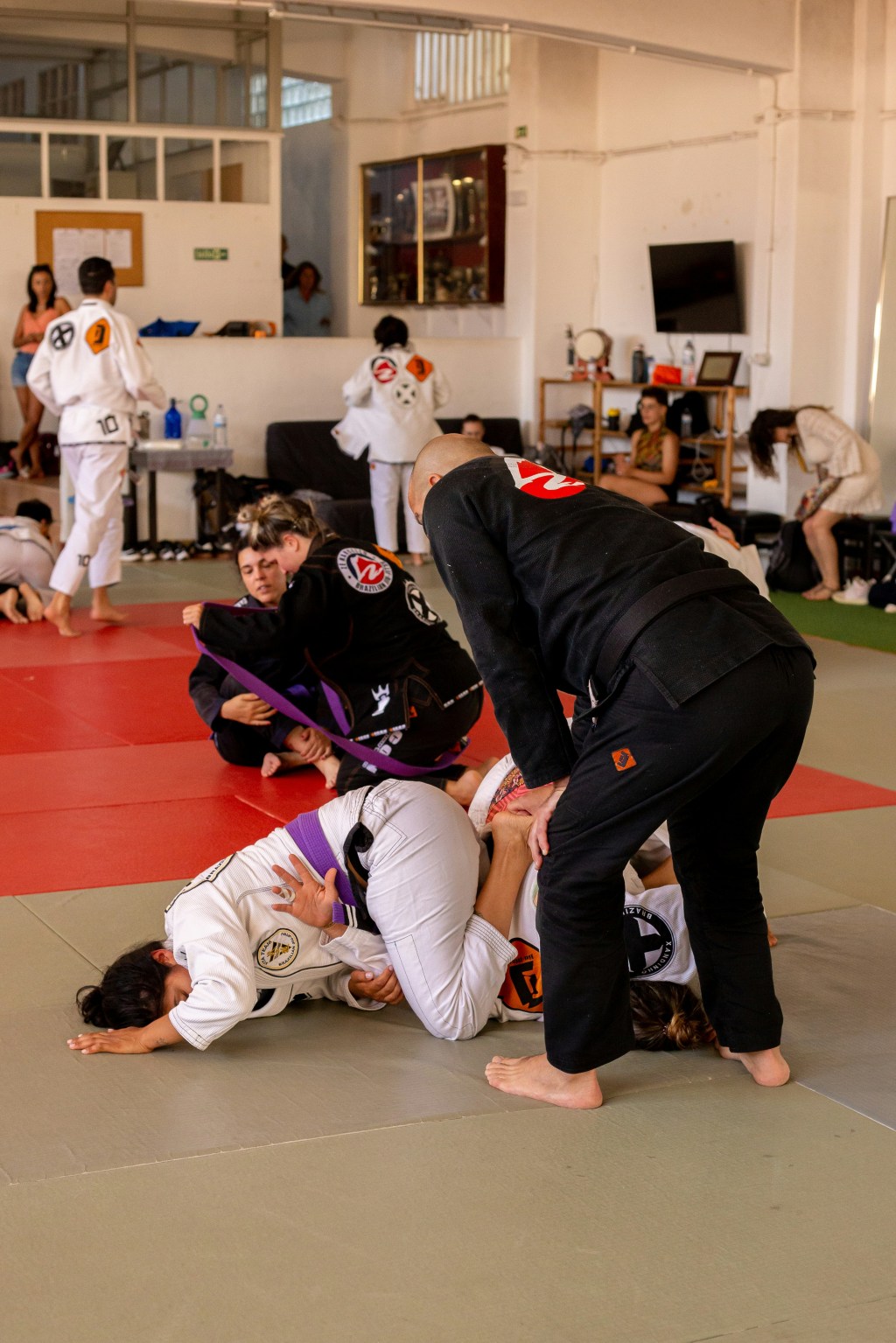
When it comes to learning women’s self-defense, joining a Brazilian Jiu-Jitsu (BJJ) school, is a fantastic way to achieve this endeavor, especially if it is a school that offers cross-training in Mixed Martial Arts (MMA) and functional self-defense. So… what is Brazilian Jiu-Jitsu exactly? Brazilian Jiu-jitsu, BJJ for short, is a martial art that emphasizes takedowns, ground fighting and submission holds (chokes, strangles, & joint locks). With its roots from Judo and Japanese Jiu-jitsu, BJJ has adapted certain techniques from these aforementioned arts to be even more functional through live sparring and pressure testing.
In modern BJJ, incorporating techniques from other grappling arts such as Wrestling, Sambo, or Catch Wrestling has become more mainstream making the art much more effective. While there is generally limited striking (punching, kicking, kneeing, & elbowing) in BJJ, there are Instructors such as Guru Burton Richardson who incorporate striking and weapons training into their BJJ curriculums. The reason why BJJ training is critical to a holistic self-defense program is that fights often go to the ground. I believe that in terms of women’s self-defense, especially in dealing with a male attacker, being forced to the ground is highly probable; therefore, it is critical for a woman to learn how to defend herself from being put there or be trained in effectively fighting from that position.
If you still aren’t comfortable or convinced that as a female, you could train in BJJ, then please read my blog titled, ‘From Mats to Life: Empowering Lessons from a Female Brazilian Jiu-jitsu/MMA Athlete‘. To read the blog, please click the article title or the picture below:

So…Are you sold on BJJ yet and want to join a school. Please consider these guidelines:
1. Define Your Goals
Before you begin shopping around for a school, I highly recommend that you figure out what your initial goals are. Are you interested in primarily self-defense? Do you want to improve your fitness? Perhaps compete? or find a new hobby? It could even be a combination of reasons and that’s encouraged. Determining your main objectives will help you identify a school that aligns with whatever your starting goals are. Be sure to write down these goals for easy reference on steps 2-4. As a side note, if you take a liking to BJJ and pursue training diligently, don’t be surprised if your goals evolve over time.
2. Research Schools in Your Area
Visit the websites of BJJ schools nearby or ask your friends on social media. BJJ has become much more mainstream so there is a very high chance that you are already connected with someone who trains in this martial art. If you find a few schools that interest you, be sure to reach out and request to observe or try a free class. This is also an opportune time to reference the goals you wrote down from step #1 to ensure you are staying aligned with your objectives. I also highly recommend checking out the school’s social media sites and online reviews to get a better understanding of their culture. Additionally, try searching for BJJ schools that are accommodating and respectful to women.
3. Visit Multiple Schools
Do not settle for the first school which you go. Try out at least 3-5 different schools to get a sense of the atmosphere, teachers and the wider student community. Most schools provide you with a free trial class, so take advantage of this opportunity to see if the school is right for you and if you feel comfortable there. Look for a good balance of warm-up, technique drilling, sparring (rolling) and cool-down. Look to see if there are other women students, which is a positive sign.
4. Assess the Instructors
One of the most important things to look for is good instruction. Be sure to reference your list from step#1 and interview the instructors in addition to observing them in action. How is their attitude in class? Do they look like they really care about their students? Is safety a priority? How do these instructors interact with female students in particular? Additionally, it is also a good idea to research the instructor’s background and discern if their credentials in BJJ are legitimate.
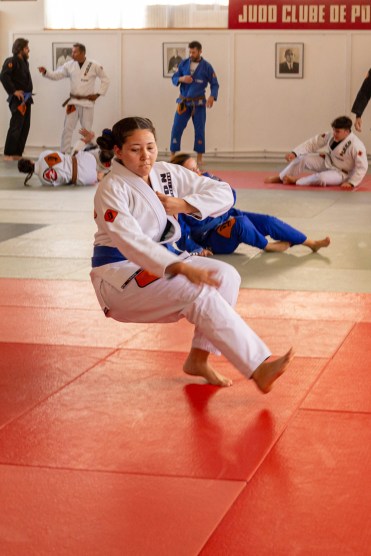
Photo by Letícia Pelissari on Unsplash
5. Evaluate the School’s Atmosphere
The atmosphere should make you feel welcome and supported which is determined by the entirety of the school, not just the instructors. In other words, you can have caring and committed instructors and yet the student population contradicts that attitude. It’s important that the instructors are also good leaders who foster within the school a culture of mutual respect, camaraderie, safety, and growth. A school with an overall healthy culture and general mindset creates strong community.
6. Consider Class Size and Student-to-Instructor Ratio
Smaller class sizes or multiple instructors generally translate into more one-on-one attention from your teachers. Ask whether the school has a good student-to-instructor ratio and whether you can get help when you need it.
7. Look for Cleanliness, Hygenic Standards and Safety Protocols
While cleanliness is important to every martial arts school, it’s especially important in BJJ since it is a close quarters martial art, and grappling mats are used. Ask if the mats are consistently cleaned, disinfected and properly maintained. When you try your free trial class, does it appear that your training partners practice good personal hygiene such as trimming their finger & toenails, use deodorant, and wear clean Gi’s or training attire. Are rules followed regarding safety in the training sessions to avoid injuries? What’s the process for dealing with any injuries that arise during the training?

Photo by Anton on Unsplash
8. Review Class Schedule and Location
This may seem like one of those “common sense” items, but a school’s class times should work well with your schedule. The reason why I bring this up is that consistency in training is crucial to one becoming better at BJJ. The other point is location. How difficult is it for you to commute to the school on a regular basis?
9. Evaluate Costs
It is important for you know exactly what you’re getting into in terms of cost structure. Find out about membership fees, additional costs (uniforms, known as a Gi, and other items such as rash guards and protective equipment cost money). Also dig to find out if there are other fees such as annual dues, testing/certificate fees and so on. As a piece of advice, while it’s tempting to go with the school that has the lowest rates, remember that cheapest isn’t always best. Therefore, look for the school that offers the best value in terms of helping you to achieve your goals, accessibility to training in terms of schedule and location, overall atmosphere and sense of community.
10. Contracts
Beware of schools with annual or multi-year contracts. Always read the fine print before you sign anything and don’t be afraid to ask questions if something isn’t clear to you.
11. Check for Additional Programs and Opportunities
Some schools are able to add programs such as seminars by visiting instructors, competitors or offer opportunities to cross-train in another martial art. All of this can make the learning experience more vibrant and increase the value of your experience.
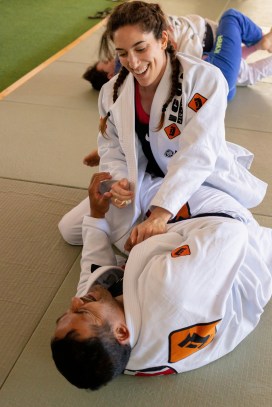
Photo by Letícia Pelissari on Unsplash
12. Community and Social Activities
Your BJJ experience can be made better by a strong community. Schools that have regular events and tournaments or other social gatherings can help you feel like part of a community. If you really want to enjoy your training, join a school with other women who have a good support system and will help you get through the tough times.
13. Speak to Female Students
If possible, talk to other women at the school about their experience. Ask what the culture is like, how the instructors are, and what are the challenges (if any). Their feedback might influence your decision.
These steps will help you on your path, and get you connected with the right school for you and your training goals. Just remember to not settle for a school that’s not completely right for you. Keep looking until you find the place that makes you feel comfortable and ready to learn.
As a little treat, before we get to our CALLS TO ACTION below, here is a video of renowned female BJJ Blackbelt and competitor Ffion Davies dominating a male training partner on the ground.
CALLS TO ACTION:
- Don’t wait. If you are even remotely interested in learning BJJ, take action now.
- If you want to pre-emptively and drastically increase your probability of surviving potentially dangerous scenarios, read ‘The Gift of Fear‘ by Gavin De Becker.

- If you live in the Cincinnati area, consider checking out the school I train out of – Cincinnati MMA Academy. Yoko, who was mentioned in another Blog within this one, trains there along with other female students. I truly admire all the instructors out of Cincy MMA who work deliberately and diligently to ensure we have a positive training environment that is safe for everyone to train out of regardless of gender, athletic ability, or goals. More information can be found at: CincyMMA.com
- If you like this article, consider signing up to receive alerts on my latest Blog posts at charlesm.online where besides Martial Arts, I write about topics that help enlighten, elevate, and empower people….and when I’m feeling a little creative, some poetry as well.


 Charles Gregory, Author
Leave a comment