
As a Martial Art, Brazilian Jiu-Jitsu (BJJ) demands skill, athleticism, mental fortitude, and physical stamina combined with varying doses of agility and flexibility. Like all combat athletics, injuries are just part of the adventure and the challenge of training through an injury can sometimes bring fresh challenges. I have had quite a good run with BJJ to date - nearly 10 years now and am currently ranked as a 2nd stripe purple belt with the goal of earning my 3rd stripe in the next 30 days. Furthermore, I have been training martial arts for about 36 years - and in that time I’ve sustained numerous injuries on and off the mats, including a fracture, multiple sprains, and dislocations. I was a lot more reckless in my younger days and, knowing that I am closing in on the half-century mark, I’ve realized that I must continuously mature in the way I train, most especially if I am injured. Here’s some of what I have used to keep training BJJ through the injuries with the goal of training well into my 80’s.
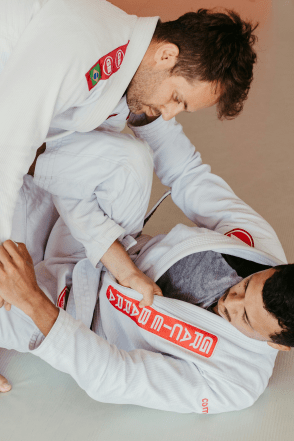
Photo by Jonathan Borba on Unsplash
1. Most importantly, your choice of BJJ school is crucial. A good school prioritizes the care of its students and does not trample on the limitations that injuries impose. A school or instructor that tries to make you work through pain that you know is legitimately there is doing more harm than good. The culture of safety or lack thereof that an instructor introduces can make a world of difference here - I know because I experienced the consequences of choosing the wrong path.
2. You must listen to your body. The first time that your body speaks to you during your training - via pain or discomfort, etc. - press the pause button immediately and assess the situation.
3. The third aspect is the need for self-effacing humility. In my youth, I felt the need to demonstrate that I was tough and, more than once, injured myself because I would brave conditions that unfit athletes should have steered clear of. Injuries healed slowly, or I would ignore minor aches, and once I had a shoulder injury that kept me out of action for years because I stubbornly refused a trip to the doctor.
4. Unless your injury really isn’t a big deal, get a medical opinion, preferably with a medical professional who is familiar with sports injuries, on what you can and can’t do when you return to training.

Photo by Usman Yousaf on Unsplash
5. Communicate - talk to your instructor so that he or she knows about your injury, and so that you can get advice about how to modify your activities to avoid making the injury worse. Talk to your training partners so that you both understand if you’re working at a lower or higher intensity, for instance if you’re holding back to avoid further injuring yourself. A couple days ago before I wrote this article, both my partner and I were injured. I had a case of lower back spasms and my partner a hip injury. We informed our instructor of our predicament, and he allowed us both to modify how we drilled and sparred, so that we could still train and keep from hurting ourselves further.
6. Focusing on technique rather than strength while recovering can help you improve your skills without further stressing the injury. Avoid sparring, and do only controlled drilling or solo exercises, as sparring is unpredictable and might cause you further injury.
7. Equipment: Protective gear and pain reducing topical ointments can serve practitioners well. Examples include knee braces, mouthguards, wrestling headguards, and ointments such as Tiger Balm and Bio freeze, all of which have been helpful to many BJJ athletes including myself. Here below are links to those items and my personal feedback respectively:
- Tiger Balm: Topical ointment that can help relieve muscle and joint pain. This is a staple product for me. I have a tight lower back and hamstring. I find that Tiger Balm helps to warm and loosen my lower back and hamstring. The smell can be slightly pungent, but I don’t go to Jiu-jitsu for date night.
- Stabilizing Knee Brace: Provides relief of knee pain, surgery recovery, sports injuries, arthritis, joint pain, meniscus tear, ACL, MCL, PCL, inflammation & swelling, sprains and strains. I have used this product in the past but need to purchase a new one. I found that this type of knee brace has provided the most stability to my knee. I find that the knee brace is much more comfortable if I am wearing grappling spats underneath. The one I had before was much more on the economical side so although it did its job, the velcro eventually came apart. Because of the great reviews I heard about the Anaconda knee brace, I recently purchased a pair as of June 2024 and so far they are the best knee braces I have ever used. I will revisit my opinion of this in about three months of use.
- BioFreeze: Another topical ointment that cools the skin which dulls pain signals. I like using Biofreeze on my shoulder muscles. I had surgery on my right shoulder (torn rotator cuff) several years ago and occasionally it feels achy. I put Biofreeze on it and the pain is mitigated. I prefer using the gel in a squeezable bottle. Biofreeze makes several product variations in the form of patches, creams, and roll-ons but I have a preference to the squeezable gel form.
- Mouth Guard: Protective device worn over the teeth to prevent injury to the mouth, teeth, lips, and gums. My instructor highly recommends using a mouth guard so I use one. I know that some other BJJ schools make it optional for their students to wear one or not. I do think that wearing a mouth guard is a good idea for two reasons. First, I was once at a tournament where I witnessed a competitor’s tooth being broken off when he was locked into a very tight triangle choke. Needless to say, he wasn’t wearing a mouth guard. Secondly, consistently wearing a mouthguard has actually helped me in making sure I am breathing through my nose as opposed to my mouth during rolling. Breathing through your nose is important because doing so helps to filter the air intake to your lungs which reduces potential respiratory issues.
- Voltaren Arthritis Pain Gel: Topical ointment that provides comfort for arthritic joints. One of my training partners who is a former college wrestler highly recommended this product to me and it is now a staple item for me. I have arthritis in one of my knees and this stuff is like magic. Within 15 minutes or so, I have no pain in my knees after application. Do make sure that you read the instructions well. This is one of those products you don’t want to use too much of in one application.
- Grappling Head Gear: Head gear that helps to prevent cauliflower ear. While I don’t use one, I know that there are BJJ practitioners who have careers where appearance is paramount use these.
8. Smartly ‘training around injuries’ involves altering the training volume and intensity, utilizing smart cross-training, and following a comprehensive recovery plan of physical therapy and stretching as well as good nutrition, hydration, and rest.
9. Finally, you must know when to stop. Just like ‘Tapping Out’, Resting when it’s appropriate will stop the damage from continuing, and help you recover faster. You can still train your mind by observing class or watching videos of BJJ instruction and competition footage.
To conclude, training BJJ while injured needs to be done in a prudent, informed fashion. Professional consultation, clear communication, technical concentration, and dedication to recovery are all key to dealing with injury in BJJ. Without temperance there cannot be any progress - the value of patience and perseverance is paramount on the road ahead.


 Charles Gregory, Author
Leave a comment